4 May 2019

Volkswagen Jettas vanish from South Africa...

30 years after first going on sale the Volkswagen Jetta is officially no longer available in South Africa. As VW focus on their crossover vehicles the Jetta is one of the most noticeable victims - the face-lifted Passat will also be absent from VW showrooms in SA too..

27 April 2018

RIP Bodo Buschmann

RIP Bodo Buschmann; the man responsible for some of the craziest Mercedes’ (and others) on the planet - through his company BRABUS - died yesterday aged 62 following a short illness.


14 January 2018


Golf GTI shines at opening round of TCR season in Dubai

Liqui Moly Team Engstler made a perfect start to the season with the Volkswagen Golf GTI TCR. Drivers Luca Engstler, Florian Thoma, Benjamin Leuchter and Jean-Karl Vernay claimed a TCR class victory in the 24-hour race in Dubai which was also the victory in the TCE touring cars category. As at the Nürburgring 24 Hours, the 350-bhp-strong Golf GTI finished ahead of all the GT4 cars in Dubai, underlining its reputation as something of a surprise package on the sports car scene.

The Golf GTI TCR, which was prepared perfectly on site and entered by Liqui Moly Team Engstler, overcame the extreme demands of a 24-hour race and ran like clockwork. Starting from third place in the TCR class, the team produced a consistently strong performance and refused to be put off by the large field, with a total of 89 cars. The number 130 Golf GTI TCR had moved up to second place in its class by the halfway point of the race. Franz Engstler’s team had the ideal strategy for the closing stages of the race, pulling clear of the chasing pack and refusing to relinquish the lead.

Engstler and his fellow drivers – reigning TCR International Series champion, Jean-Karl Vernay, the 2017 champion in the TCR class of the VLN Endurance Championship, Benjamin Leuchter, and touring car newcomer Florian Thoma – appear to have formed a successful team right from the word go in 2018

16 September 2017


Racing Porsches...

17 August 2017


21 December 2016


Volkswagen Van Centre Brian Currie in Milton Keynes has donated a brand new Caddy van to the South Central Ambulance Charity. The converted Volkswagen Caddy van will be used by the charity’s team of volunteers to deliver lifesaving first response care to residents of Newport Pagnell and the surrounding area.

20 December 2016

2017 WRC

Now if someone could tie up (well pay for) this car, Andreas Mikkelsen and (a soon to be unemployed) Jost Capito they'd have a winning team!!!

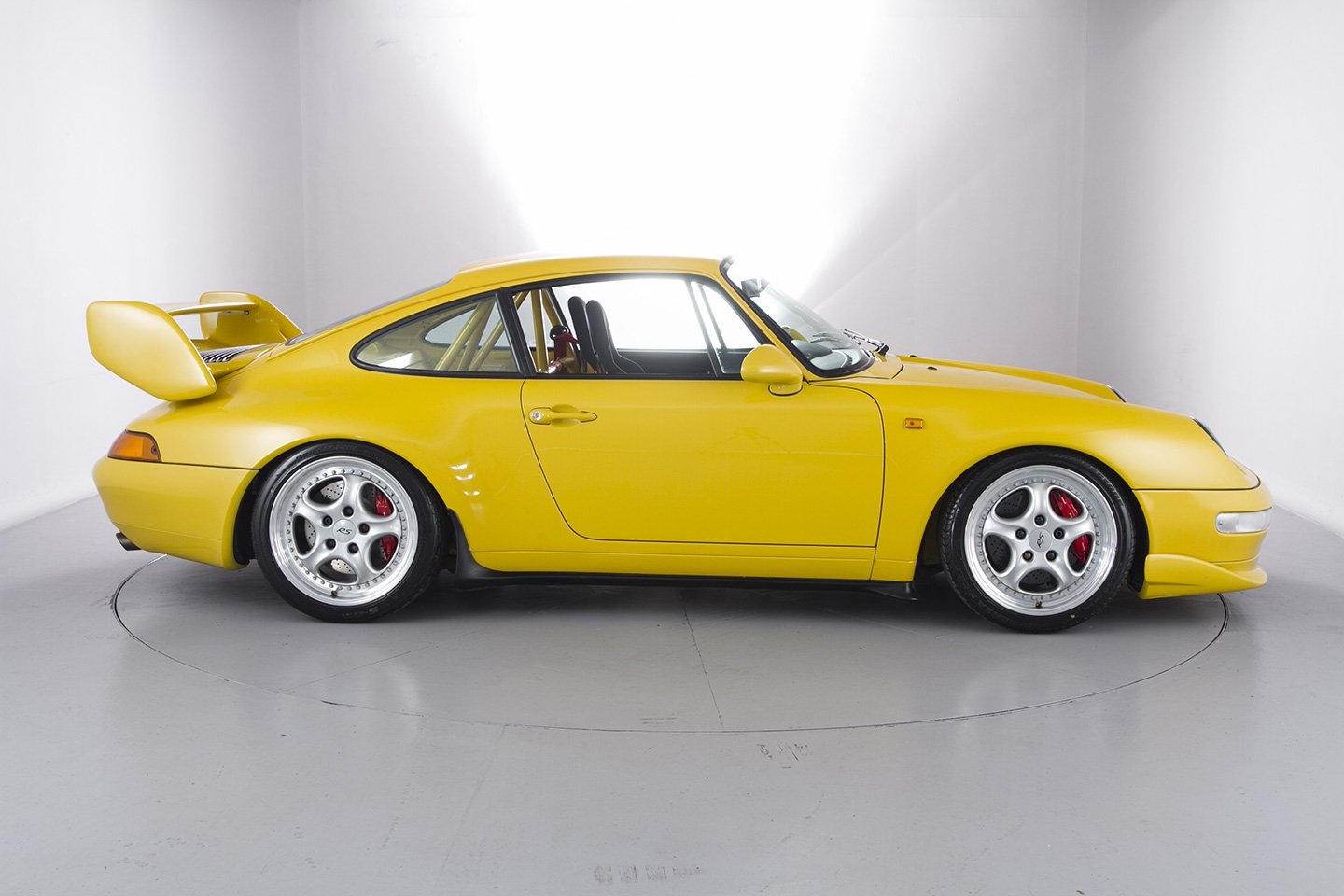
Porsche 911 (993) RS Clubsport

The RS Clubsport is perhaps the purest version of the 993-generation Porsche 911, plus with a mere 227 built it’s also extremely rare.


Leading London classic car retailer Hexagon are proud to offer this pristine 1995 model year example finished in Speed Yellow with 18-inch ‘Speedline’ alloy wheels and black interior.

For more information, please visit http://hexagonclassics.com


17 December 2016

Tiguan Allspace


Volkswagen will launch an exciting addition to the Tiguan range next year: the new

Tiguan Allspace. The lengthened version of the best-seller will celebrate its world premiere at the beginning of January at the North American International Auto Show (NAIAS, 8– 22 January 2017). Beginning in the early part of summer, the Tiguan – with up to seven seats – will be launched successively in North America, China and Europe.

The European version of the lengthened Tiguan will begiven the added designation “Allspace”, while the models for North America and China will simply be called "Tiguan". As the name suggests, the new long version ofthe Tiguan boasts more room inside, and a longer wheelbase (+ 11 cm). Bothaspects ensure greater flexibility in the interior. In addition, the Tiguan Allspace comes with an attractive range of equipment features.


MINI John Cooper Works Clubman

The new


MINI John Cooper Works Clubman offers all the style, practicality and fresh-thinking of the Clubman, combined with the high performance and sporting dynamics of the John Cooper Works range.

The result is a unique and exclusive proposition that combines the John Cooper Works-specification engine and corresponding modifications with MINI’s ALL4 all-wheel drive system. In creating this potent model, able to take full advantage of the maximum possible traction in all conditions, MINI has created a powerful but practical vehicle that’s fun to drive in the true spirit of a MINI.

As the latest member of the John Cooper Works family, the MINI John Cooper Works Clubman features all the upgrades already seen on the John Cooper Works Hatch and Convertible models. These include the 231 hp engine with modified MINI TwinPower turbocharger, sports suspension and powerful braking system. A 0-62 mph time of just 6.3-seconds and a top speed of 148 mph is the result, but not at the expense of economy or emissions; with up to 41.5mpg on the combined cycle and CO2 emissions as low as 154 g/km.

The MINI John Cooper Works Clubman is instantly recognisable thanks to its more aggressive front and rear bumpers, and its rear wing. These not only help reduce lift, but in the case of the front section, assist with the additional cooling requirements of the more powerful engine. Unique alloy wheels and John Cooper Works badging also denote the top-of-the-range Clubman, as does the option of the special colour ‘Rebel Green’.

Inside, the John Cooper Works specification includes sports seats, an Alcantara headliner, and a wide array of standard equipment including MINI Navigation, Bluetooth and USB connectivity, and cruise control with brake function. MINI logo projection is also included within the standard package. Beyond that, MINI offers a huge range of personalisation options and further equipment, allowing owners to create their own, unique, MINI John Cooper Works Clubman.

The design of the new MINI John Cooper Works Clubman maximises the presence of this unique vehicle, with the added flair of a high performance model.

It’s instantly recognisable thanks to a bespoke front apron, with air inlets now cited where other Clubman models have parking and fog lamps. These intakes channel fresh air to brake cooling ducts and to cool the additional radiator of the Works specification cooling system. Integrated air curtains and air breathers help optimise the aerodynamic properties of the vehicle. Unique side sills, roof spoiler and a rear apron help to reduce aerodynamic lift.

Further exclusive touches include the side turn indicator surrounds, which feature a red accentuation line along with the John Cooper Works logo applied against a black background, and the hexagon pattern grille with a red crossmember bar at the bottom edge. The ‘John Cooper Works’ logo appears here too, as well as on the right-hand door at the rear of the car.

The standard LED headlamps are surrounded by a daytime driving light ring that also uses LED technology, the lower section of which is white and acts as the turn indicator. The horizontally arranged rear light units also comprise LED lamps.
 

The new MINI John Cooper Works Clubman uses the same highly tuned engine as the John Cooper Works Hatch and Convertible models. The 2-litre unit features the latest MINI TwinPower Turbo Technology and Valvetronic fully variable valve control on both the intake and exhaust camshafts.

To effectively realise the increased output of 231 hp between 5,000-6,000rpm (up 39 hp on the standard Cooper S engine), the John Cooper Works Clubman uses a modified turbocharger made from a particularly heat resistant material. A correspondingly larger intercooler is also fitted, which contributes to an increase in torque to 350 nm which develops over a particularly wide band from 1,450-4,800rpm. Increasing the boost pressure is teamed with a lower compression ratio thanks to the use of model-specific pistons. Unsurprisingly, the cooling system has also been upgraded to cope with the increased heat generated by a more powerful engine, and now features a second coolant radiator found in the left-hand wheel arch.

Finally, a sports exhaust helps to reduce the engine’s backpressure and also gives the John Cooper Works Clubman a sporty sound familiar from other models in the John Cooper Works range.

The inherent efficiency of this engine contributes to an impressive fuel consumption figure of 38.2mpg (41.5mpg), and CO2 emissions of 168 g/km (154 g/km) (figures in brackets for vehicles fitted with the eight-speed sports Steptronic transmission).

With the new John Cooper Works Clubman, MINI is for the first time combining its most potent engine offering with its ALL4 all-wheel drive system. The result is the most efficient possible deployment of the available power, providing very strong acceleration in all conditions.

The considerable power and torque of the 2-litre turbocharged engine is fed through either a six-speed manual gearbox or an 8-speed sports Steptronic transmission. The manual gearbox offers ideally spaced ratios, a model-specific gear lever and short shift mechanism for rapid gearchanges, and also features an engine speed adaption facility via a gear sensor for the smoothest possible downshifts. Carbon friction linings for the synchronising rings add to the inherent efficiency of this lightweight, easy-to-use gearbox.

The eight-speed Steptronic gearbox allows for especially fuel-efficient driving thanks to the wide spread – but closely stacked – gear ratios and quick shifting times. Further efficiency improvements can be realised if the vehicle is fitted with MINI Navigation XL, as the Steptronic gearbox takes into account upcoming bends and junctions, thereby avoiding unnecessary gearchanges. Gears can be changed either automatically, or manually via the shift selector or with paddles on the steering wheel. A launch control function enables the quickest possible acceleration away from rest, every time.

The ALL4 all-wheel drive system deploys the engine’s output to maximum good use. The system uses a bevel gear power take off on the front differential and an electro-hydraulically controlled ‘hang-on’ clutch mounted on the rear axle to distribute the engine’s power as required. In normal driving and with the DSC active, the vehicle is effectively front-wheel drive, the clutch only sending power rewards when required - in just fractions of a second - if the need to do so is detected by the DSC system. The DSC continually monitors wheel speeds, accelerator position and engine torque, amongst others, plus takes into account the dynamic traction control setting and MINI Driving Mode, thereby quickly identifying any possible need for torque distribution – either in slippery conditions or during especially dynamic driving.

Not only does the ALL4 system make driving more fun, it also assists the new MINI John Cooper Works Clubman in reaching 62mph from a standing start in just 6.3-seconds.

Naturally, the suspension and braking set up of the new MINI John Cooper Works Clubman has been upgraded to match its increased performance. As with the other John Cooper Works specification MINIs in the range, the John Cooper Works Clubman features a firmer suspension setup, in this case specifically tailored to the Clubman’s wheelbase and weight distribution.
 

Variable Damper Control is available as an optional extra, offering a choice of two set-ups for the electronically controlled dampers, which can be accessed via the MINI Driving Modes, a standard feature on the John Cooper Works Clubman. SPORT mode provides the most dynamic driving experience, while in MID and GREEN mode the damper characteristics support a more comfortable driving style. The MINI Driving Modes are selected via a rotary switch at the base of the gear lever and also influence the characteristic curves of the accelerator pedal and steering, the engine acoustics and the shift characteristics of the 8-speed Steptronic sports transmission (if the latter is fitted).

The standard Dynamic Stability Control (DSC) also includes Dynamic Traction Control (DTC), Electronic Differential Lock Control (EDLC) - which acts as an electronic locking function for the front axle differential - and Performance Control, which assists agile turn-in when taking bends at speed. The standard functions of the electromechanical power steering include speed-related steering support for maximum precision when cornering at speed and for comfortable manoeuvring at low speeds.

The braking equipment of the John Cooper Works Clubman has also been strengthened over the Cooper S model, with a four-piston caliper setup developed in partnership with braking specialists Brembo. These powerful brakes are readily identifiable by the red finish for the calipers, complete with the John Cooper Works logo.

The standard equipment for the car also includes 18” light alloy wheels in Black ‘Grip Spoke’ design, which are exclusive to this model. This wheel design is also available as an option in silver, with a 19” ‘Course’ two-tone design a further option.

The inherent efficiency of the engine, transmission and ALL4 drivetrain is further boosted by additional technology – MINImalism features that include as standard brake energy recuperation, shift point display, needs-based control of the fuel pump, coolant pump and other ancillary units, electromechanical power steering (which only provides assistance as it’s needed) and a map controlled oil pump. The auto start/stop function can also be used in conjunction with the Steptronic transmission.

The MINI Driving Modes enable activation of the GREEN mode, which supports an efficiency-optimised driving style. In models fitted with the Steptronic transmission it is possible to use the coasting function, whereby the drivetrain is decoupled at speeds of between approximately 30 and 100 mph as soon as the driver removes their foot from the accelerator pedal.

The inherent practicality built into every new MINI Clubman is obvious, with five full-sized seats accessed via four side doors and the Clubman’s characteristic split rear doors. Behind the latter is a load area of 360-litres, which rises to as much as 1,250-litres with the rear seats folded flat (a 40:20:40 split is available as an option).

The John Cooper Works modifications take this highly versatile package and inject the genuine fittings and feel of a high performance car, creating a unique proposition. The standard trim includes John Cooper Works sports seats in Carbon Black upholstery with Dinamica/fabric with integrated headrests. As an option these can be trimmed in Dinamica/Carbon Black leather with red applications.

In addition, there’s a John Cooper Works leather steering wheel with multifunction buttons, the John Cooper Works door sill cover strips, the John Cooper Works gear or selector lever, stainless steel pedals including driver footrest and cockpit displays with dark dials. Other sporting details include the anthracite roof liner, interior trim ‘Grey Chequered’, and red design accentuations not just on the seat surfaces, but also on the steering wheel rim, the gear or selector lever and the central instrument surround.

With its torsionally stiff, rigid and weight-optimised body structure, the new MINI John Cooper Works Clubman forms the ideal basis for its comprehensive set of standard safety fittings. These form part of the integrated MINI safety concept comprising of six airbags, 3-point automatic belts on all seats (including belt tensioners and adaptive belt force limiters at the front) as well as ISOFIX child seat mountings at the rear. Other standard features include a tyre pressure display function for each individual wheel and Intelligent Emergency Call with automatic detection of vehicle location and accident severity, as well as the collision warning with city braking function. Meanwhile, impact absorbers and deformation elements ensure optimised pedestrian protection.

LED headlamps are fitted as standard, and they can be supplemented with a turning light function including adaptive light distribution, if desired. In addition to air conditioning, Bluetooth hands-free telephone facility and electric parking brake, other standard features include Park Distance Control with sensors at the rear, cruise control with brake function, and Comfort Access - also enabling touch-less opening of the split doors by means of a foot movement under the rear apron. The standard fit audio system is the Radio MINI Visual Boost including USB socket and operation via the MINI Controller in the centre console, as well as the 6.5-inch colour screen in the central instrument fitted with a MINI Navigation system.

Optional items include the Harman Kardon hi-fi system and the MINI Navigation System XL. The features of the MINI Navigation XL include not just the Touch Controller in the centre console but also an 8.8-inch colour screen in the central instrument. For the first time in a MINI, the latter takes the form of a touchscreen, so functions can now also be selected and adjusted by placing a fingertip on the screen. Other options include a panorama glass roof, 2-zone automatic air conditioning, seat heating for driver and front passenger and windscreen heating. The unique MINI Connected in-car infotainment program is also available, offering extensive integration of smartphones in the car. This allows the use of internet-based services in the areas of infotainment, communication and driving experience by means of apps.

Over 80% of MINI John Cooper Works Clubman customers are expected to choose the Chili pack which adds a host of additional extras to the car. These features include the customer’s choice of any upholstery from the range, heated seats, 19” Course spoke alloy wheels and the storage compartment pack. Chili pack is priced at £2,000 on MINI John Cooper Works Clubman.


A range of additional option packs and personalisation equipment allows every MINI John Cooper Works Clubman buyer to tailor their car to their exact preferences, in the process creating a unique take on an already highly exclusive vehicle.

S-Class Coupé “Night Edition”

Mercedes-Benz is extending its range of exclusive models with the arrival of the S-Class Coupé: “Night Edition”. This two-door model will be available to order as a S 400 4MATIC Coupé; S 500 Coupé and S 500 4MATIC Coupé.


The exterior equipment details of the S-Class Coupé “Night Edition” include its distinctive radiator grille with a single louvre in high-gloss black, together with 20-inch AMG multi-spoke light-alloy wheels. The exclusive wheels are painted black and feature high-sheen detailing. The exterior mirror housings and the inserts in the side sill panels are also finished in high-gloss black. Front and rear aprons with AMG bodystyling come as standard, with “Night Edition” badges on the front wings. Selenite grey magno paint comes as standard.

The interior features engraved “Night Edition” wording on the insert of the nappa leather AMG sports steering wheel. Customers can choose from upholstery in leather, nappa leather or AMG nappa leather in black/black; crystal grey/black; saddle brown/black; or Bengal red/black; while a high-gloss black poplar wood trim comes as standard.

Boasting a stylish appearance, generous equipment and refined driving characteristics, the S-Class Coupé combines modern luxury with state-of-the-art technology.


Technical data at a glance:
S 400 4MATIC Coupé - V6 2996cc - 367hp & 500Nm
S 500 Coupé - V8 4663cc - 455hp & 700Nm
S 500 4MATIC Coupé - V8 4663cc - 455hp & 700Nm

The Night Edition S-Class Coupé  will celebrate its world premiere at the Detroit auto show in January 2017.

8 December 2015

'British' 924 Carrera GT Le Mans returns 'home' for restoration.


The number 2 Porsche 924 Carrera GT Le Mans raced at the iconic French 24 Hours endurance motor sport event in 1980 as part of an innovative three-car, international team. Car #2 (the British entry) comprised Tony Dron and Andy Rouse and they finished the 24 Hours in 12th place.

The car is now undergoing a full restoration before returning to race tracks across Britain - Porsche Classic centres in Britain are restoring the car in time for the 40th anniversary of the launch of the 924 in 1976, the first model in the so-called ‘transaxle’ series of Porsche cars, with their front engines and gearboxes located in combination with the rear-driven axle.


The 924 Carrera GT Le Mans.

 Since its earliest days, Porsche has taken lessons from the race track and applied them in the development of its road cars – and vice versa. The 924 Carrera GT Le Mans was no exception. Taking as its basis the 210 hp 924 Carrera GT road car, famous Porsche racing engineer, Norbert Singer, was given the task of creating a fully-fledged racing car. Singer and the engineering staff at the Porsche Motorsport team at Weissach, near Stuttgart, Germany, drafted a relatively modest list of modifications. Under the product code Type 937, a production Carrera GT bodyshell was stiffened considerably with the addition of an aluminium roll-cage, and the exterior bodywork was clothed in new lightweight plastic panels. These extended to the nose, which was made more aerodynamic while keeping the appearance of the 924, and also helped to shroud the wider 11-inch front wheels and 12-inch wide rear wheels with racing Dunlop slick tyres.
The front cross-member was welded in place to increase cornering stiffness, and although the MacPherson strut front suspension was retained, titanium springs and Bilstein gas dampers were fitted. At the rear, however, the torsion bars were supplemented with titanium coil springs. The driveshafts were also made of titanium (in fact, they were taken from the ferocious 911-derived 935 race car) and the rear differential was fully locked for maximum traction.
Under the bonnet, the engine was relatively straightforward. The VW-based 1,984 cc, turbocharged in-line four-cylinder underwent some modifications to help with airflow and cooling; the KKK turbocharger was moved to the left side of the engine, and the intercooler increased in size and moved to the front. Bosch/Kugelfischer mechanical fuel injection replaced the production specification K-Jetronic, and dry-sump lubrication ensured consistent oil supply under racing loads.
As a consequence, power output rose by 50% from the 210 hp / 6,000 rpm of the road car to 320 hp / 7,000 rpm, with a 40% boost in torque. Combined with a weight reduction to 930 kg from 1,180 kg, the car’s performance leapt forwards. For a Le Mans racer, top speed is a prime focus and maximum velocity rose to 180 mph; large ventilated and cross-drilled brake discs (borrowed from the 917) were employed to slow the cars after the Mulsanne Straight.
In the context of the recent success at Le Mans with prototypes vying for outright wins (and already by 1980 Porsche had an enviable record of triumphs in the 24 Hours), there was some mixed feelings regarding the relative performance of these brave 924 Carrera GTP race cars. However, a suggestion by Porsche Cars GB to run the cars in the national identities of Britain, Germany and the US, with national drivers and exterior liveries, saw the programme gain a welcome boost internally at Porsche AG and also generate wide media interest.


In the event, external factors prior to the 1980 Le Mans start, saw Derek Bell switch to the American #3 car with US driver Al Holbert, and the #2 British car was shared by the proven pair of Tony Dron and Andy Rouse, and the #4 German car was driven by Jürgen Barth and Manfred Schurti.
A wet start to the Le Mans 24 Hours race itself saw the modest expectations of qualifying transformed considerably, with Bell running 16th overall after one hour followed by Barth in 22nd and Rouse in 28th. By nightfall, the three 924 Carrera GTP race cars were running 10th, 14th, and 15th and by breakfast time on Sunday morning they had moved up to sixth, seventh and eighth.
At the chequered flag, the #4 German car finished in sixth place, a remarkable achievement for the 924 Carrera GTP in what was not only the car’s debut at Le Mans but also the first time the 924 model had been entered by the Porsche factory in motor sport. The #2 British car crossed the line in 13th position, one place behind the #3 American entry.
In line with the Porsche ethos of race to road technology transfer, the 1980 Le Mans programme inspired the production of 59 examples of a new 924 GTS model that was homologated for competition use, plus a further 19 examples of the higher-powered GTR offered in full Le Mans race specification for customer motorsport (and priced at 180,000 Deutschmarks).
In a fitting post-script, in the 1981 Le Mans 24 Hours, the Porsche factory entered a 924 GTP which with a large 410 hp 2,479 cc four cylinder engine was technically a prototype of the forthcoming 2.5-litre 944 road car. Driven by Jürgen Barth and Walter Röhrl, it won the GTP class category and placed seventh overall. Of three privately-entered 924 Carrera GTR cars, the top finisher was the car of Andy Rouse and Manfred Schurti, in 11th place.

25 August 2015

12 April 2015


Mercedes-Benz continues its sales drive, notching up another record performance this month (March 2015) selling an impressive 183,467 vehicles - an increase of 15.7% over last year. This is the highest sales total ever seen by Mercedes-Benz in a single month. Year-to-date sales are also impressive - 429,602 vehicles have been handed over to customers, an increase of 14.8% over the previous year.


20 February 2014

Volkswagen Motorsport, Marklund Motorsport and the FIA World Rallycross Championship


Swedish Rallycross team Marklund Motorsport have agreed an exclusive three-year partnership with Volkswagen Motorsport (current World Rally Championship champions) for the FIA World Rallycross Championship. Marklund Motorsport recently unveiled 2013 GRC Champion Toomas ‘Topi’ Heikkinen as their lead driver for next two seasons and Topi along with teammate Anton Marklund will line-up in their new Marklund Motorsport Volkswagen Polo RX Supercars at round one of the FIA World Rallycross in Montalegre, Portugal on May 3rd.

Jan Marklund, Marklund Motorsport team owner, believes Volkswagen's involvement gives the team the perfect platform to back-up its ambitions for title success. He said "Volkswagen’s pedigree in motorsport is there for everyone to see, there is no better manufacturer for us to be partnered with than the current WRC champions. Volkswagen is looking to make an immediate global impact in the world of Rallycross and I’m happy that Marklund Motorsport is their chosen partner for the FIA World Rallycross Championship."

The announcement comes just days after the officially supported Volkswagen Andretti Rallycross team announced it was contesting the Global Rallycross Championship with a pair of Polos before switching to new GRC specific Beetles later in the season. With support from Volkswagen America the team will be pushing for the championship title with drivers Tanner Foust and Scott Speed.

8 February 2014

Rally Sweden - Volkswagen 1, 2 & 6


Jari-Matti Latvala / Miikka Anttila claimed victory on Rally Sweden today, having been in the top 4 from the start Latvala was able to master the ever changing conditions and was also able to fend off his teammates Andreas Mikkelsen / Mikko Markkula. Mikkelsen took second overall and his first ever WRC podium having challenge for outright victory throughout the whole event.


Sébastien Ogier / Julien Ingrassia recovered from the mistake of yesterday to take 6th overall, setting a string of fastest stage times along the way. Whilst Rally Sweden is disappointing for the French duo they have been able to keep their championship challenge on track.

Sweden marked Volkswagen Motorsport's the first victory of a dominant season last year, this year they looked even more impressive!

Day 3 Rally Sweden


At the end of the third days rallying in Sweden Volkswagen Motorsport drivers remain first and second overall, although during a dramatic day of rallying excitement and problems changed the look of the leaderboard dramatically.

Overnight leaders Sébastien Ogier / Julien Ingrassia plummeted down the leaderboard on the first stage of the day having spent over 4 minutes stuck in a snow bank. Ogier accepted full responsibility for the driver error blaming a lack of concentration. Having clipped a snow bank and got sucked into the duo then needed help to dig the car out before they could continue.


Andreas Mikkelsen / Mikko Markkula took the rally lead on the first stage and then became embroiled in a tight battle with teammates Jari-Matti Latvala / Miikka Anttila for the top podium spot. Latvala really seemed to revel in the battle overtaking Mikkelsen and very gradually extending his slender lead.

With road conditions varying from snow and ice to gravel and standing water the drivers had to balance outright pace with tyre and car preservation. Despite this Ogier began a charge back up the leader board, finishing the day with 6 fastest stage times having recovered from 20th overall to 9th by the end of the final stage of day 3.


Day 4 sees the longest stages of the rally and there remains plenty of excitement left in the 2014 Rally Sweden.


Rally Sweden leader board after day 3

1.
J. Latvala


2.
A. Mikkelsen


3.
M. Østberg


4.
M. Hirvonen


5.
O. Tanak


6.
K. Meeke


7.
H. Solberg


8.
P. Tidemand


9.
S. Ogier


10.
E. Evans

6 February 2014

Day 2 Rally Sweden


At the end of the second day of competition on the Rally Sweden Volkswagen Motorsport drivers hold the top three overall positions, capping a perfect day of rallying for the German team.


Sébastien Ogier / Julien Ingrassia finished day two and start day three in first overall, having snatched the lead back from Andreas Mikkelsen / Mikko Markkula on the final stage of the day. Ogeir and Mikkelsen had been locked in a battle for first throughout the day, with Ogier dropping behind the young Norwegian towards the end of the day before clawing back the lost time. Mikkelsen (one of the stars of the rally so far) opted to use worn tyres on the last stage and was prepared to sacrifice his outright pace in order to have a brand new set of tyres (and studs) for tomorrow's first stage.

Jari-Matti Latvala / Miikka Anttila kept a watching brief in third overall for the whole day, trading seconds with Ogier and Mikkelsen and keeping in contention despite small gear selection concerns. The duo are expected to challenge both team mates on tomorrow's faster and more flowing stages.


Whilst the German team's drivers currently have the podium sewn up, Swedish stages are particularly unforgiving and there are a lot of stage miles to be covered before the event finishes.....


Volkswagen Andretti Rallycross team


A tie up between Volkswagen of America and Andretti Sports Marketing has created tremendous interest in the 2014 Global Rallycross series. The new Volkswagen Andretti Rallycross team will start the season in Volkswagen Polos (based on the all conquering VW Polo R WRC car) before switching to GRC specific Beetles later in the season. The Beetles should be ready for competition in time for the X Games in June, they will be 4 wheel drive with around 600BHP.

The Rockstar Energy Drink Volkswagen Andretti Rallycross team entry will be driven by former GRC Champion, rally driver and Top Gear host Tanner Foust. Tanner has plenty of experience behind the wheel of rallycross cars, not only in the GRC but also in Europe as well - having proven to be a match for the finest in Europe every time he competed.

Scott Speed will drive the 7UP Volkswagen Andretti Rallycross team car in the 2014 season. Speed was one of the most impressive drivers during the 2013 season, winning two races in and going on to finish a very impressive fifth overall. Scott Speed brings a huge amount of driving experience (and an amazing driving talent too) having competed in Formula 1 (in the Scuderia Toro Rosso team) as well as NASCAR too.


The Global Rallycross series starts in Barbados in May and concludes in Las Vegas on the 5th of November.